Here are my two cents.
The metric that actually matters
It doesn't matter how much you earn. It doesn't matter how much you've saved. What matters most is the gap between your earnings and your expenses — your personal cash flow.
Positive cash flow means your finances are improving month over month. Negative cash flow means they're deteriorating — regardless of how impressive your income looks on paper.
Two examples that prove the point
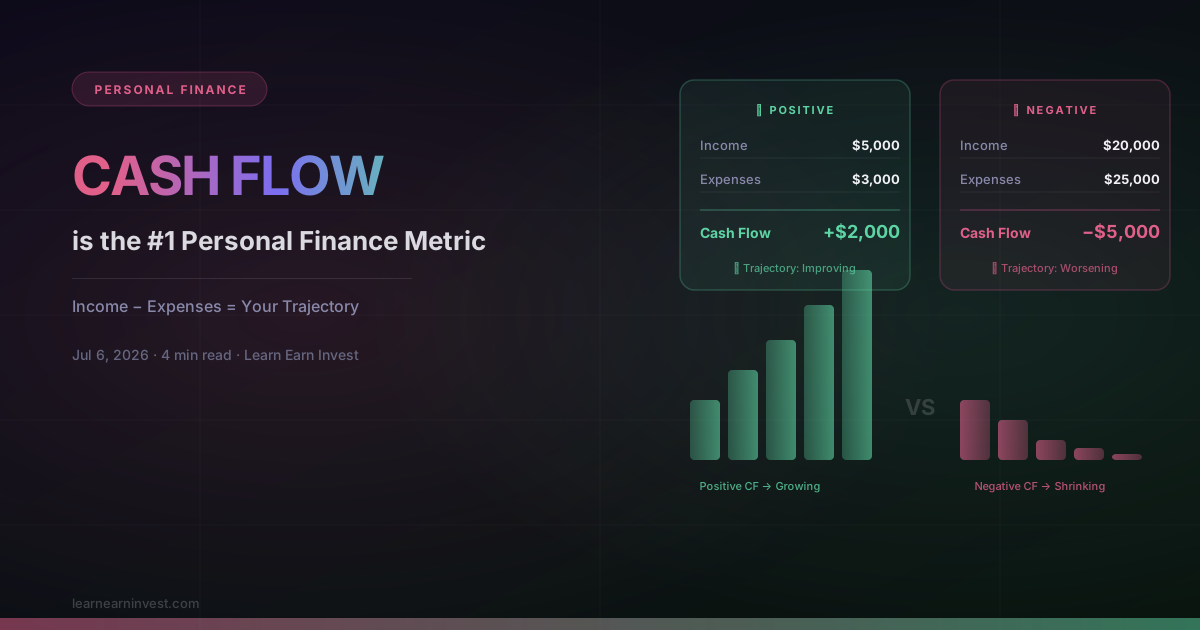
Consider these two households:
The household earning $5,000 a month is in a stronger financial position than the one earning $20,000. Every month, they have $2,000 to deploy — into savings, investments, debt payoff, or opportunity. The second household is going backwards by $5,000 a month, no matter how impressive their income sounds at a dinner party.
A high income doesn't make you wealthy. A widening gap does.
Why people miss this
We live in a culture that celebrates income. High salaries and business revenue get glorified. But income is only half the equation — and it's not the more important half.
Plenty of high earners are financially fragile. And plenty of modest earners are quietly building real wealth — because they've mastered the gap. The moment you shift your focus from "how do I earn more?" to "how do I widen the gap?" everything changes. Both sides matter, but the gap is what you control.
What to do right now
Calculate your cash flow. Take your average monthly take-home income and subtract your average monthly expenses. That number — positive or negative — is your current financial trajectory. Everything else in personal finance flows from there.
- If it's negative: the gap closes by cutting expenses, growing income, or both. Start with expenses — it's the fastest lever.
- If it's positive: the next question is where that surplus is going — and whether it's working hard enough for you.
Your cash flow is your financial trajectory. Know it. Track it. Widen it.
Agree? Disagree? I'd genuinely love to hear your take.