If you've ever Googled "how to budget," you've seen the 50/30/20 rule. It's everywhere. And like most things that are everywhere, the advice ranges from genuinely helpful to dangerously oversimplified.
Here's an honest look at what it actually is, when it works, and when to ignore it entirely.
What the rule actually says
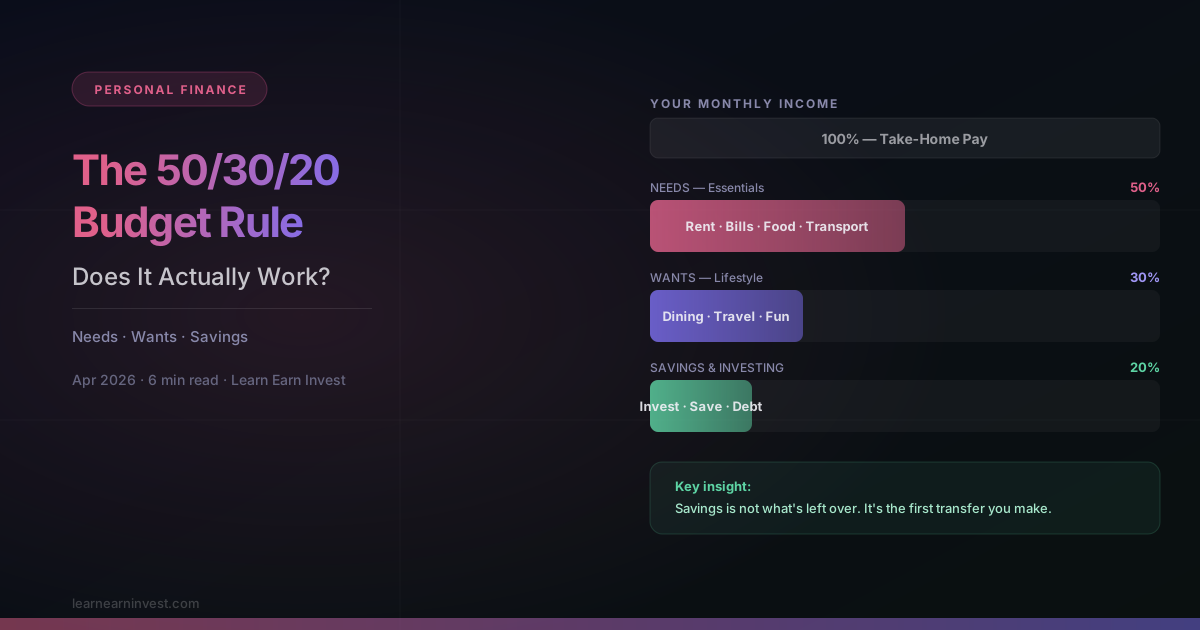
The 50/30/20 framework divides your after-tax income into three buckets:
The three buckets
Needs are the non-negotiables: rent, groceries, utilities, transport, minimum debt payments. Wants are lifestyle choices: eating out, subscriptions, holidays, new clothes. Savings covers your emergency fund, investments, and paying down debt above the minimum.
Where it genuinely helps
The rule's biggest strength is that it gives beginners a framework to start with rather than a blank page. If you've never budgeted before, having three clear categories is far more actionable than being told to "track everything."
It also bakes in savings as non-optional — that 20% isn't "what's left over at the end of the month." That shift in thinking alone is worth a lot.
The habit of saving matters far more than the exact percentage. If 10% is all you can manage right now, start there — the discipline compounds even if the number doesn't yet.
Where it falls short
It assumes a certain income level
If you're on a lower income, keeping needs to 50% may be impossible. Rent alone in most cities can consume 40–50% of take-home pay. The rule wasn't designed for this reality and applying it rigidly will just make you feel like you're failing when you're not.
The "needs vs wants" line is blurry
Is a gym membership a need or a want? What about a car if you live rurally? A smartphone? The categories require honest self-examination and the answer is different for everyone.
20% savings isn't always enough
If you're starting late, carrying debt, or have no emergency fund, 20% may need to become 30% or more for a period. The rule is a starting point, not a ceiling.
How to adapt it to real life
Rather than treating 50/30/20 as gospel, use it as a diagnostic tool. Run your last three months of spending through it and see where you land. If your "needs" are coming in at 65%, the question isn't "how do I feel bad about this" — it's "what can I change here, and what's genuinely fixed?"
A more flexible version many people find useful:
- Calculate your actual fixed costs first (rent, insurance, minimum payments)
- Set a savings target as a firm percentage — automate it
- Let the rest be your "flexible spending" pool
This removes the fuzzy needs-vs-wants debate and still builds the saving habit that matters most.
The bottom line
The 50/30/20 rule works as a starting framework and a rough health check on your finances. It doesn't work as a rigid prescription applied to every income level and life situation.
The real question to ask isn't "am I hitting these percentages?" — it's "am I spending intentionally, saving consistently, and making progress?" If the answer is yes, the exact numbers are secondary.