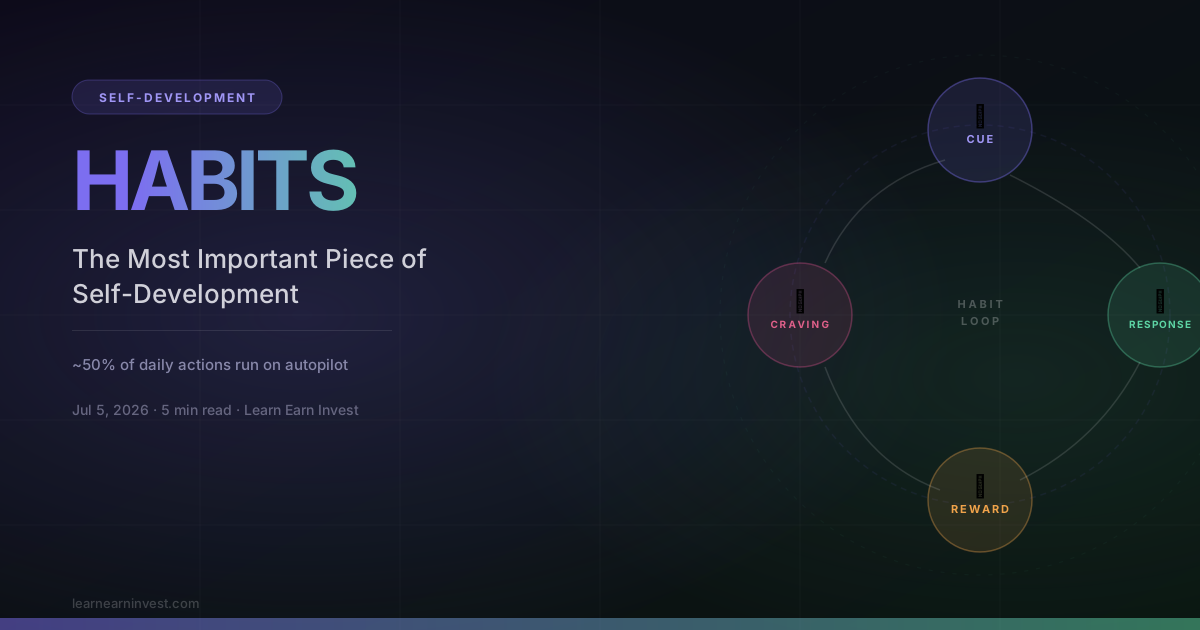
3 questions to start:
1 — Do you agree that habits are the most important piece of self-development?
2 — How would you define a habit?
3 — What habits are you currently working on building?
Here's my take.
What exactly is a habit?
Habits are the actions we repeatedly take — often on complete autopilot. They're the things we've done so many times that we execute them without conscious thought, out of pure routine.
Is that oversimplified? Absolutely. But at its core, a habit is a decision that's already been made. You don't consciously decide to brush your teeth every morning — you just do it. That automatic execution is the power of habits working in your favour.
Habits help us avoid decision-making fatigue. The "decision" has already been made — so the brain skips deliberation and goes straight to execution. That's autopilot by design.
Why does this matter — the numbers
That number is the reason habits matter more than any other single factor in self-development. If half your actions are already decided before you even wake up, then improving those automatic behaviours is the highest-leverage move available to you.
The chain that connects habits to results
Follow this logic step by step:
If your habits determine what you do, and what you do determines what gets executed, and consistent execution determines your results — then your habits directly feed your outcomes.
Not your motivation. Not your intentions on January 1st. Your daily habits.
Habits and consistency
Results — in almost any discipline — come from consistent action over time. Whether you're building a business, improving your fitness, growing your investment portfolio, or developing a skill, the people who win aren't necessarily the most talented. They're usually the most consistent.
And habits are the engine of consistency.
When a behaviour is habit-driven, you don't rely on motivation to show up. Motivation is unreliable — it peaks and dips based on how you feel on any given day. Habits run regardless. That's the structural edge.
Bringing it all together
The logic is straightforward:
- Habits drive consistency
- Consistency drives results
- Therefore: build the right habits, and the results follow
If you're serious about self-development, habits aren't just one tool in the toolkit — they're the foundation everything else is built on. Motivation, goals, and mindset all matter. But without the right habits underpinning them, they produce bursts of progress, not lasting change.
To build strong habits — and destroy bad ones — it pays to understand how habits are actually formed. How the loop works. What triggers them, what sustains them, and what breaks them down. That's where the real leverage is.
You don't rise to the level of your goals. You fall to the level of your systems. Build better habits — build a better system.